
Quick Summary
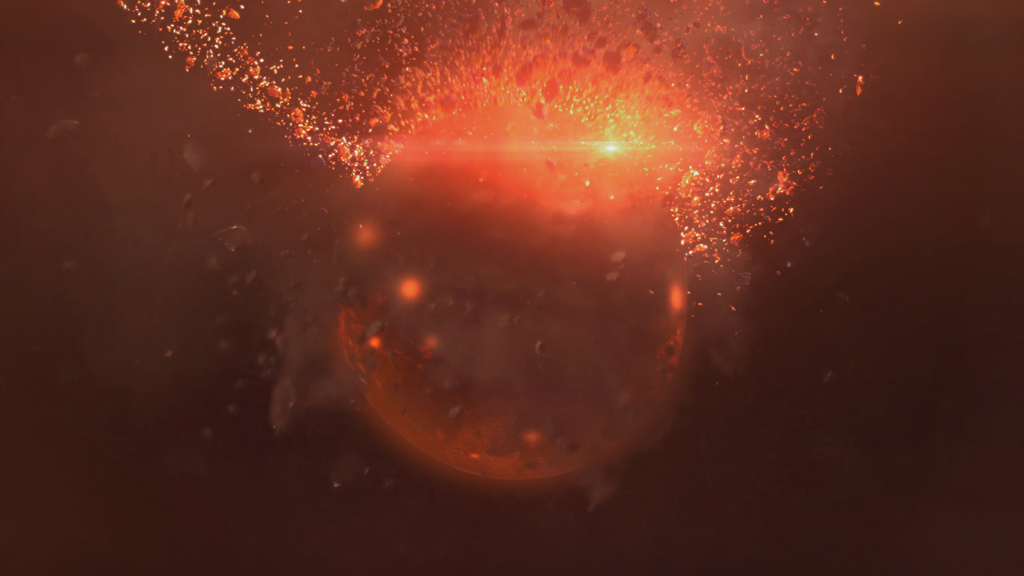
According to researchers, Mars was once a water‑filled planet that supported life. They propose that a succession of severe mass‑extinction events gradually stripped the planet of its oceans, transforming it into the arid desert landscape we observe today, over billions of years.
About This Program ✦
Life & Death on the Red Planet is a television programme presented as a single episode. It falls under the broader genre of documentary‑style episodes that aim to convey scientific ideas to a general audience. The title signals a focus on the contrasting states of existence and extinction on Mars, setting the stage for a concise yet informative broadcast. The episode opens with the suggestion that Mars was not always the barren world we see today; rather, there was a time when the planet supported life. Scientists featured in the programme argue that a succession of catastrophic mass‑extinction events reshaped the Martian environment. According to their view, these upheavals turned a once‑water‑rich planet into the arid desert that dominates the surface now. Throughout the segment, the narrative concentrates on the transition from a watery world to a dry one. It highlights the role of repeated, devastating extinctions in driving that change, implying that the loss of water and the harsh conditions that followed were central to the planet’s decline. The focus remains on the scientific consensus that such a series of events could have erased any early Martian biosphere. In its concluding remarks, the programme reinforces the idea that Mars’ present desolation is the product of these ancient, large‑scale die‑offs. By linking the planet’s past habitability to a chain of mass extinctions, the episode underscores how dramatically the Red Planet’s climate and surface have transformed over time.

How the Universe Works broadcasts on Discovery Science at 8:00am, Thursday, 12 February 2026.