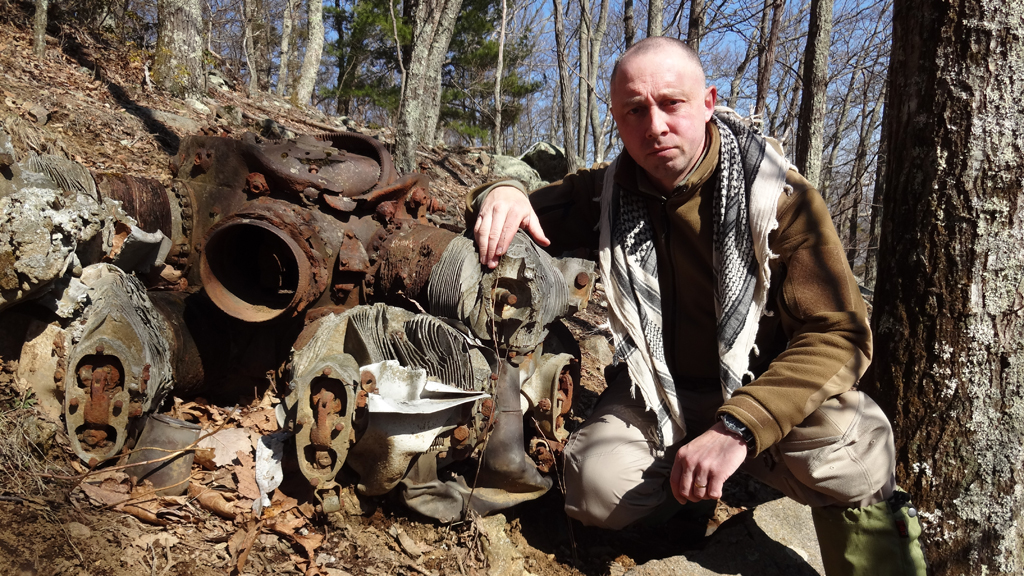
WW2 Air Crash Detectives
About This Show
WW2 Air Crash Detectives is a news/current affairs series airing on UK television.

Recent Airings
No upcoming airings scheduled
Showing recent airings from the last 3 months. This show may return in the future.


Saturday 24 January


In this episode, presenter Garth Barnard delves into the grim reality of wartime aviation, uncovering how thousands of servicemen lost their lives not on the battlefield but in disastrous air incidents and fatal training mishaps during the Second World War. He examines the scale of these catastrophes, tracing the circumstances that led to such massive loss of life among the armed forces. By piecing together archival material and survivor testimonies, Barnard sheds light on the often‑overlooked human cost of military preparation and the tragic accidents that claimed so many lives in the skies above the conflict, through careful research and detailed analysis.
The final segment of the programme turns to the 1943 aircraft crash in Gibraltar, an incident that killed Wladyslaw Sikorski, the Polish prime minister in exile. By revisiting the disaster’s circumstances, the documentary brings its narrative to a close, underscoring the impact of Sikorski’s death. Closing footage revisits the wreckage and the remote airfield, reminding viewers of the day’s historical significance. The segment combines photographs, testimonies and commentary to reconstruct the events leading up to the crash. It also reflects on the political vacuum left in the Polish government‑in‑exile after Sikorski’s sudden demise. Throughout, the film’s tone remains sober and investigative, allowing the audience to grasp the magnitude of the loss.
Sunday 25 January
In this episode, presenter Garth Barnard delves into the grim reality of wartime aviation, uncovering how thousands of servicemen lost their lives not on the battlefield but in disastrous air incidents and fatal training mishaps during the Second World War. He examines the scale of these catastrophes, tracing the circumstances that led to such massive loss of life among the armed forces. By piecing together archival material and survivor testimonies, Barnard sheds light on the often‑overlooked human cost of military preparation and the tragic accidents that claimed so many lives in the skies above the conflict, through careful research and detailed analysis.
The final segment of the programme turns to the 1943 aircraft crash in Gibraltar, an incident that killed Wladyslaw Sikorski, the Polish prime minister in exile. By revisiting the disaster’s circumstances, the documentary brings its narrative to a close, underscoring the impact of Sikorski’s death. Closing footage revisits the wreckage and the remote airfield, reminding viewers of the day’s historical significance. The segment combines photographs, testimonies and commentary to reconstruct the events leading up to the crash. It also reflects on the political vacuum left in the Polish government‑in‑exile after Sikorski’s sudden demise. Throughout, the film’s tone remains sober and investigative, allowing the audience to grasp the magnitude of the loss.
Saturday 31 January
In this episode, Garth Barnard delves into the 1943 Baker's Creek aviation disaster, a tragic crash that claimed the lives of forty American servicemen. He examines the circumstances surrounding the loss of a B‑17 bomber that went down in Australia, piecing together the events that led to the fatal accident. Barnard's investigation sheds light on the details of the crash, focusing on the impact it had on the servicemen involved and the broader wartime context. By retracing the flight path and analysing the wreckage, the programme offers a concise account of how the B‑17 met its end at Baker's Creek.
In this episode, Garth Barnard turns his attention to the Turweston Wellington Collision, a tragic mid‑war accident that took place on 8 July 1944. On that day two Wellington bombers struck each other, and the ensuing disaster claimed the lives of thirteen soldiers. The loss was especially poignant because the men had not yet entered the conflict that would later define their service; the war they were destined to fight had not even begun for them. Barnard’s investigation pieces together the circumstances of the crash, shedding light on how a routine training sortie turned into a fatal encounter. The incident is recorded as a notable wartime aviation accident.
Sunday 1 February
In this episode, Garth Barnard delves into the 1943 Baker's Creek aviation disaster, a tragic crash that claimed the lives of forty American servicemen. He examines the circumstances surrounding the loss of a B‑17 bomber that went down in Australia, piecing together the events that led to the fatal accident. Barnard's investigation sheds light on the details of the crash, focusing on the impact it had on the servicemen involved and the broader wartime context. By retracing the flight path and analysing the wreckage, the programme offers a concise account of how the B‑17 met its end at Baker's Creek.
In this episode, Garth Barnard turns his attention to the Turweston Wellington Collision, a tragic mid‑war accident that took place on 8 July 1944. On that day two Wellington bombers struck each other, and the ensuing disaster claimed the lives of thirteen soldiers. The loss was especially poignant because the men had not yet entered the conflict that would later define their service; the war they were destined to fight had not even begun for them. Barnard’s investigation pieces together the circumstances of the crash, shedding light on how a routine training sortie turned into a fatal encounter. The incident is recorded as a notable wartime aviation accident.
In this episode, Garth Barnard turns his attention to a 1944 disaster in Nebraska, where a military transport aircraft went down amid a fierce storm. He examines the circumstances surrounding the crash, looking for clues that might explain what caused the aircraft to fail. Barnard analyses weather reports, eyewitness testimonies and any surviving records, aiming to pinpoint the most plausible reason for the tragedy. By piecing together the limited evidence, he seeks to shed light on why the plane was unable to survive the violent conditions that night. The investigation focuses solely on uncovering the likely cause of the 1944 Nebraska crash.
The programme sees Garth Barnard turning his investigative gaze onto the 1942 tragedy that claimed the life of Prince George, the Duke of Kent. He lays out what is known about the fatal incident, describing the circumstances that led to the young royal’s untimely death and framing the story for the audience. Barnard then asks whether the incident was genuinely accidental, casting doubt on the suggestion that it was simply an accident and hinting at the possibility of other explanations. By probing the nature of the event, he encourages viewers to rethink the accepted account of the Duke’s demise and consider that the truth may be more complex than a straightforward accident.
Today
In this episode, Garth Barnard turns his attention to a 1944 disaster in Nebraska, where a military transport aircraft went down amid a fierce storm. He examines the circumstances surrounding the crash, looking for clues that might explain what caused the aircraft to fail. Barnard analyses weather reports, eyewitness testimonies and any surviving records, aiming to pinpoint the most plausible reason for the tragedy. By piecing together the limited evidence, he seeks to shed light on why the plane was unable to survive the violent conditions that night. The investigation focuses solely on uncovering the likely cause of the 1944 Nebraska crash.
The programme sees Garth Barnard turning his investigative gaze onto the 1942 tragedy that claimed the life of Prince George, the Duke of Kent. He lays out what is known about the fatal incident, describing the circumstances that led to the young royal’s untimely death and framing the story for the audience. Barnard then asks whether the incident was genuinely accidental, casting doubt on the suggestion that it was simply an accident and hinting at the possibility of other explanations. By probing the nature of the event, he encourages viewers to rethink the accepted account of the Duke’s demise and consider that the truth may be more complex than a straightforward accident.