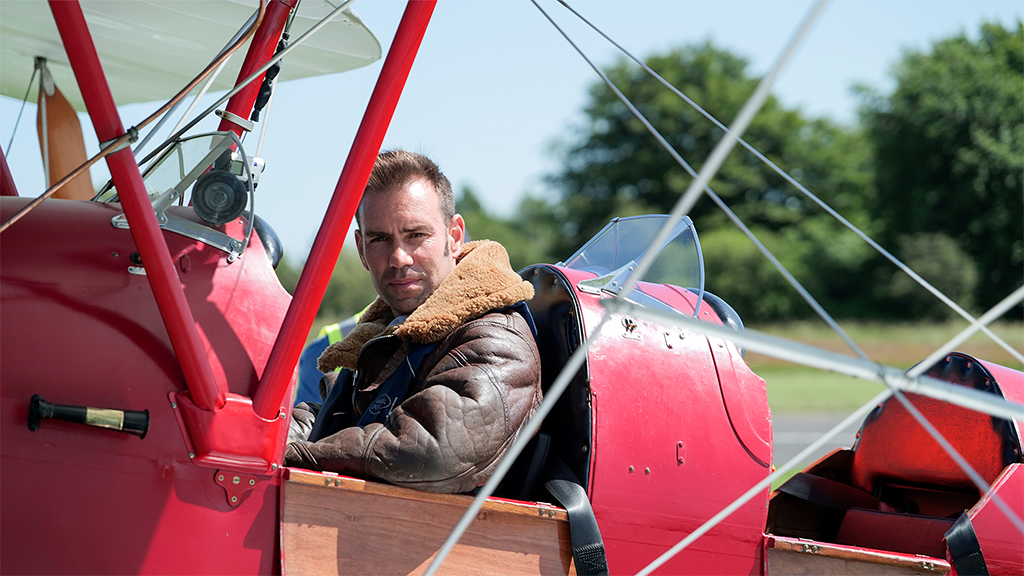
James Crawford investigates how the Scottish population has repeatedly tackled the obstacles presented by the country’s rugged terrain. He looks at the ways in which they have managed to bridge isolated valleys, cross formidable hills and forge routes that bind villages and towns together.
Through a historical lens, Crawford shows that, despite the harsh landscape, the Scots have continually found practical solutions to link their communities, ensuring movement and communication across the ages. He follows this pattern through the centuries, and throughout history, highlighting the enduring ingenuity applied to the landscape and the way each generation has still kept remote locales effectively connected and resilience for future generations, and beyond.
James Crawford sets out to understand how the Scottish landscape shapes sport. In the programme he explores the way the country's terrain, climate and open spaces have left their imprint on athletic activity, especially golf. To illustrate this connection he visits a historic golf course that was laid out by one of the game's founding fathers. While on site he observes how the course's design reflects the surrounding environment and how the natural setting influences the way the sport is played. Crawford's journey highlights the intimate link between the land and the game, showing that the character of the Scottish outdoors continues to guide sport's evolution.
In this episode, presenter James Crawford explores a lost canal just outside Glasgow, walking along its quiet, overgrown banks and noting the lingering sense of history that the waterway exudes. The canal, framed by vegetation and stonework, offers a glimpse into a forgotten part of the region's network. He then shifts his focus to a different time, travelling back to the heyday of air‑ship travel and arriving on the deserted island of Mingulay, where the isolation of the place reflects the bygone era of dirigibles that once crossed the skies above the western seaboard. The island's stark cliffs and empty fields give a sense of abandonment, underscoring the contrast with the bustling air‑ship era he has just revisited.