Mafia's Greatest Hits


About This Show
Mafia's Greatest Hits is a news/current affairs series airing on UK television.
Next Episode
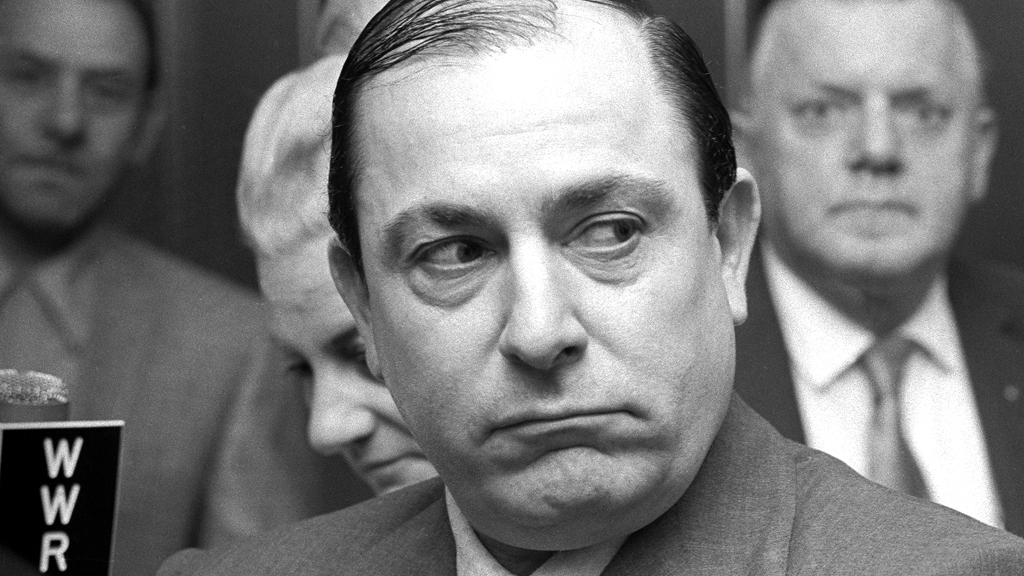
Mafia's Greatest HitsThe series, presented as an episode titled “Sam Giancana”, is a programme that seeks to pull back the curtain on the Mafia’s most infamous personalities. It positions itself as a factual account, concentrating on the hidden lives and operations of those who have shaped organised crime in the United States. The core of the episode centres on Sam Giancana, a figure whose reach extended well beyond the underworld. It reveals his links to the Kennedy family, his association with entertainer Frank Sinatra, and his alleged connections with the Central Intelligence Agency. By highlighting these relationships, the programme paints a picture of a mob boss entwined with power on several fronts. The episode aims to lift the veil on how Giancana’s influence seeped into political circles, the world of show business, and covert government operations. It presents a narrative that connects his criminal activities with the broader fabric of American society, suggesting that the lines between organised crime and legitimate institutions were often blurred. By starting with Giancana, the programme sets the stage for future installments that will turn the spotlight on other notorious Mafia figures. This approach promises a continued investigation into the hidden networks that have shaped the criminal underworld, offering viewers a step‑by‑step look at the secretive world that operates behind the headlines.

Upcoming Air Times
Tomorrow
The episode centres on the notorious mobster Charlie ‘Lucky’ Luciano, detailing how he leveraged his Mafia contacts to assist the United States government during the Second World War. In return for providing this covert support, Luciano negotiated his release from prison, securing a parole that would free him from his sentence. The narrative tracks his dual role as a crime lord and an unofficial operative, illustrating the quid‑pro‑quo arrangement that saw his criminal network employed for wartime intelligence and sabotage efforts, while the promise of parole acted as his incentive. Thus the programme portrays how Luciano’s criminal influence was temporarily redirected to serve national interests, highlighting the exchange that ultimately secured his freedom.
The episode centres on the notorious mobster Charlie ‘Lucky’ Luciano, detailing how he leveraged his Mafia contacts to assist the United States government during the Second World War. In return for providing this covert support, Luciano negotiated his release from prison, securing a parole that would free him from his sentence. The narrative tracks his dual role as a crime lord and an unofficial operative, illustrating the quid‑pro‑quo arrangement that saw his criminal network employed for wartime intelligence and sabotage efforts, while the promise of parole acted as his incentive. Thus the programme portrays how Luciano’s criminal influence was temporarily redirected to serve national interests, highlighting the exchange that ultimately secured his freedom.
The episode centres on the notorious mobster Charlie ‘Lucky’ Luciano, detailing how he leveraged his Mafia contacts to assist the United States government during the Second World War. In return for providing this covert support, Luciano negotiated his release from prison, securing a parole that would free him from his sentence. The narrative tracks his dual role as a crime lord and an unofficial operative, illustrating the quid‑pro‑quo arrangement that saw his criminal network employed for wartime intelligence and sabotage efforts, while the promise of parole acted as his incentive. Thus the programme portrays how Luciano’s criminal influence was temporarily redirected to serve national interests, highlighting the exchange that ultimately secured his freedom.
Wednesday 11 February
The Maverick Mobster episode centres on Joe Colombo, a notorious mob figure whose appetite for fame and financial gain was matched only by his fierce commitment to championing the rights of Italian‑American communities. Born into the underworld, Colombo leveraged his notoriety to pursue both personal wealth and public recognition, while simultaneously mounting a vigorous campaign against the discrimination and harassment that Italian‑Americans endured throughout the 1970s. Through a blend of personal ambition and activist drive, the programme portrays how Colombo’s dual pursuits intertwined, illustrating a complex portrait of a criminal who sought to reshape public perception of his ethnic group while chasing the trappings of celebrity and profit.
The Maverick Mobster episode centres on Joe Colombo, a notorious mob figure whose appetite for fame and financial gain was matched only by his fierce commitment to championing the rights of Italian‑American communities. Born into the underworld, Colombo leveraged his notoriety to pursue both personal wealth and public recognition, while simultaneously mounting a vigorous campaign against the discrimination and harassment that Italian‑Americans endured throughout the 1970s. Through a blend of personal ambition and activist drive, the programme portrays how Colombo’s dual pursuits intertwined, illustrating a complex portrait of a criminal who sought to reshape public perception of his ethnic group while chasing the trappings of celebrity and profit.
The Maverick Mobster episode centres on Joe Colombo, a notorious mob figure whose appetite for fame and financial gain was matched only by his fierce commitment to championing the rights of Italian‑American communities. Born into the underworld, Colombo leveraged his notoriety to pursue both personal wealth and public recognition, while simultaneously mounting a vigorous campaign against the discrimination and harassment that Italian‑Americans endured throughout the 1970s. Through a blend of personal ambition and activist drive, the programme portrays how Colombo’s dual pursuits intertwined, illustrating a complex portrait of a criminal who sought to reshape public perception of his ethnic group while chasing the trappings of celebrity and profit.
Thursday 12 February
John Gotti, propelled by a relentless ambition, emerges as the central figure of the programme. His determination and desire for power shape his trajectory within the criminal underworld, positioning him as a pivotal character whose actions drive the narrative forward. The episode chronicles how Gotti seized control of the Gambino family, achieving the top position by ordering the assassination of the former boss. This decisive move eliminates the previous leader and paves the way for Gotti to assume command, marking his ascent to the head of one of New York’s most notorious crime syndicates. His new role establishes him as a leading figure within the organisation.
John Gotti, propelled by a relentless ambition, emerges as the central figure of the programme. His determination and desire for power shape his trajectory within the criminal underworld, positioning him as a pivotal character whose actions drive the narrative forward. The episode chronicles how Gotti seized control of the Gambino family, achieving the top position by ordering the assassination of the former boss. This decisive move eliminates the previous leader and paves the way for Gotti to assume command, marking his ascent to the head of one of New York’s most notorious crime syndicates. His new role establishes him as a leading figure within the organisation.
John Gotti, propelled by a relentless ambition, emerges as the central figure of the programme. His determination and desire for power shape his trajectory within the criminal underworld, positioning him as a pivotal character whose actions drive the narrative forward. The episode chronicles how Gotti seized control of the Gambino family, achieving the top position by ordering the assassination of the former boss. This decisive move eliminates the previous leader and paves the way for Gotti to assume command, marking his ascent to the head of one of New York’s most notorious crime syndicates. His new role establishes him as a leading figure within the organisation.
Friday 13 February
Tony Spilotro was the man the Chicago Mafia sent to look after its share of the Las Vegas casino scene. In his capacity as the mob’s enforcer, he made sure the organisation’s interests were protected and its operations ran smoothly in the glittering casino world. That very role put him squarely in the sights of the FBI, which soon began to target him as part of its investigations into organised crime. His duties also included monitoring rival crews, settling disputes and making sure the casinos stayed profitable for the family. The programme follows his attempts to keep the mob’s foothold secure while evading the relentless pressure from federal agents.
Tony Spilotro was the man the Chicago Mafia sent to look after its share of the Las Vegas casino scene. In his capacity as the mob’s enforcer, he made sure the organisation’s interests were protected and its operations ran smoothly in the glittering casino world. That very role put him squarely in the sights of the FBI, which soon began to target him as part of its investigations into organised crime. His duties also included monitoring rival crews, settling disputes and making sure the casinos stayed profitable for the family. The programme follows his attempts to keep the mob’s foothold secure while evading the relentless pressure from federal agents.
Tony Spilotro was the man the Chicago Mafia sent to look after its share of the Las Vegas casino scene. In his capacity as the mob’s enforcer, he made sure the organisation’s interests were protected and its operations ran smoothly in the glittering casino world. That very role put him squarely in the sights of the FBI, which soon began to target him as part of its investigations into organised crime. His duties also included monitoring rival crews, settling disputes and making sure the casinos stayed profitable for the family. The programme follows his attempts to keep the mob’s foothold secure while evading the relentless pressure from federal agents.