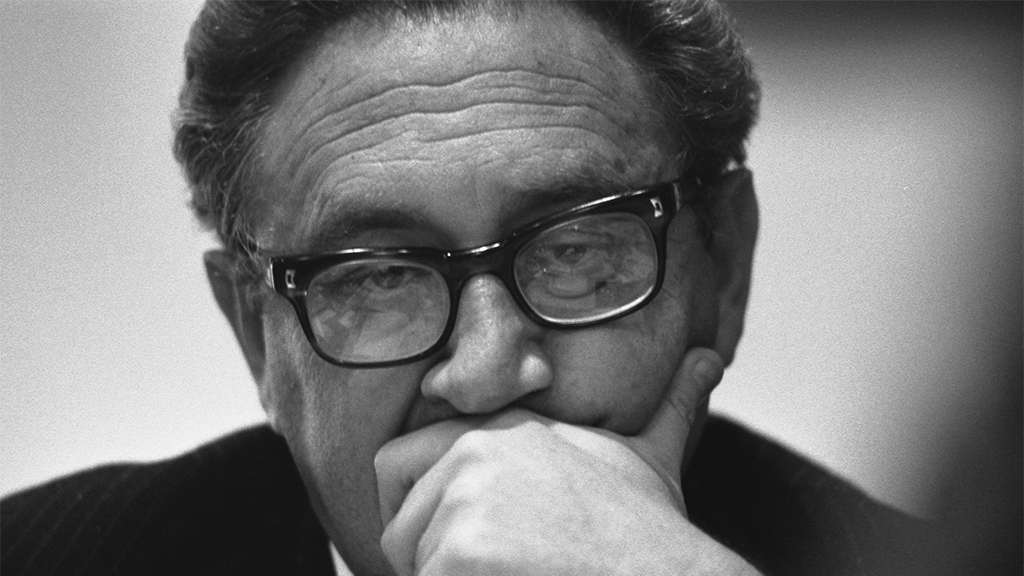
Kissinger
About This Show
Kissinger is a news/current affairs series airing on UK television.

Recent Airings
No upcoming airings scheduled
Showing recent airings from the last 3 months. This show may return in the future.
Monday 2 February

The first half of a two‑part documentary series, titled “The Necessity of Power,” turns its lens on Henry Kissinger, the American statesman whose career propelled him to the pinnacle of U.S. diplomatic circles. It chronicles his early years, his rise through the political ranks, and the ways in which he came to shape foreign policy at the highest levels. By following his life and professional path, the programme offers a detailed portrait of a figure who attained the most senior echelons of American diplomacy, illustrating how his influence grew as he navigated the corridors of power. The film examines the decisions and strategies that defined his tenure, highlighting the extent of his authority within the diplomatic establishment.

The first half of a two‑part documentary series, titled “The Necessity of Power,” turns its lens on Henry Kissinger, the American statesman whose career propelled him to the pinnacle of U.S. diplomatic circles. It chronicles his early years, his rise through the political ranks, and the ways in which he came to shape foreign policy at the highest levels. By following his life and professional path, the programme offers a detailed portrait of a figure who attained the most senior echelons of American diplomacy, illustrating how his influence grew as he navigated the corridors of power. The film examines the decisions and strategies that defined his tenure, highlighting the extent of his authority within the diplomatic establishment.
The first half of a two‑part documentary series, titled “The Necessity of Power,” turns its lens on Henry Kissinger, the American statesman whose career propelled him to the pinnacle of U.S. diplomatic circles. It chronicles his early years, his rise through the political ranks, and the ways in which he came to shape foreign policy at the highest levels. By following his life and professional path, the programme offers a detailed portrait of a figure who attained the most senior echelons of American diplomacy, illustrating how his influence grew as he navigated the corridors of power. The film examines the decisions and strategies that defined his tenure, highlighting the extent of his authority within the diplomatic establishment.
Tuesday 3 February
The second half of the two‑part series looks at how Henry Kissinger’s fervent anti‑communist stance steered United States foreign policy. It follows the way his ideological drive informed diplomatic and strategic choices across a number of pivotal global arenas. The programme demonstrates Kissinger’s impact in Vietnam, where his position shaped American involvement; in China, where his approach guided opening moves; in Chile, where his anti‑communist posture affected US actions; and in the Soviet Union, where his perspective coloured the broader Cold War strategy. All of this unfolded during the latter half of the twentieth century.
The second half of the two‑part series looks at how Henry Kissinger’s fervent anti‑communist stance steered United States foreign policy. It follows the way his ideological drive informed diplomatic and strategic choices across a number of pivotal global arenas. The programme demonstrates Kissinger’s impact in Vietnam, where his position shaped American involvement; in China, where his approach guided opening moves; in Chile, where his anti‑communist posture affected US actions; and in the Soviet Union, where his perspective coloured the broader Cold War strategy. All of this unfolded during the latter half of the twentieth century.
The second half of the two‑part series looks at how Henry Kissinger’s fervent anti‑communist stance steered United States foreign policy. It follows the way his ideological drive informed diplomatic and strategic choices across a number of pivotal global arenas. The programme demonstrates Kissinger’s impact in Vietnam, where his position shaped American involvement; in China, where his approach guided opening moves; in Chile, where his anti‑communist posture affected US actions; and in the Soviet Union, where his perspective coloured the broader Cold War strategy. All of this unfolded during the latter half of the twentieth century.
Saturday 7 February
The first half of a two‑part documentary series, titled “The Necessity of Power,” turns its lens on Henry Kissinger, the American statesman whose career propelled him to the pinnacle of U.S. diplomatic circles. It chronicles his early years, his rise through the political ranks, and the ways in which he came to shape foreign policy at the highest levels. By following his life and professional path, the programme offers a detailed portrait of a figure who attained the most senior echelons of American diplomacy, illustrating how his influence grew as he navigated the corridors of power. The film examines the decisions and strategies that defined his tenure, highlighting the extent of his authority within the diplomatic establishment.
The second half of the two‑part series looks at how Henry Kissinger’s fervent anti‑communist stance steered United States foreign policy. It follows the way his ideological drive informed diplomatic and strategic choices across a number of pivotal global arenas. The programme demonstrates Kissinger’s impact in Vietnam, where his position shaped American involvement; in China, where his approach guided opening moves; in Chile, where his anti‑communist posture affected US actions; and in the Soviet Union, where his perspective coloured the broader Cold War strategy. All of this unfolded during the latter half of the twentieth century.
The first half of a two‑part documentary series, titled “The Necessity of Power,” turns its lens on Henry Kissinger, the American statesman whose career propelled him to the pinnacle of U.S. diplomatic circles. It chronicles his early years, his rise through the political ranks, and the ways in which he came to shape foreign policy at the highest levels. By following his life and professional path, the programme offers a detailed portrait of a figure who attained the most senior echelons of American diplomacy, illustrating how his influence grew as he navigated the corridors of power. The film examines the decisions and strategies that defined his tenure, highlighting the extent of his authority within the diplomatic establishment.
The second half of the two‑part series looks at how Henry Kissinger’s fervent anti‑communist stance steered United States foreign policy. It follows the way his ideological drive informed diplomatic and strategic choices across a number of pivotal global arenas. The programme demonstrates Kissinger’s impact in Vietnam, where his position shaped American involvement; in China, where his approach guided opening moves; in Chile, where his anti‑communist posture affected US actions; and in the Soviet Union, where his perspective coloured the broader Cold War strategy. All of this unfolded during the latter half of the twentieth century.